Author Archives: brianzylstra

Legislature passes King bill that would help rural hospital in Toppenish

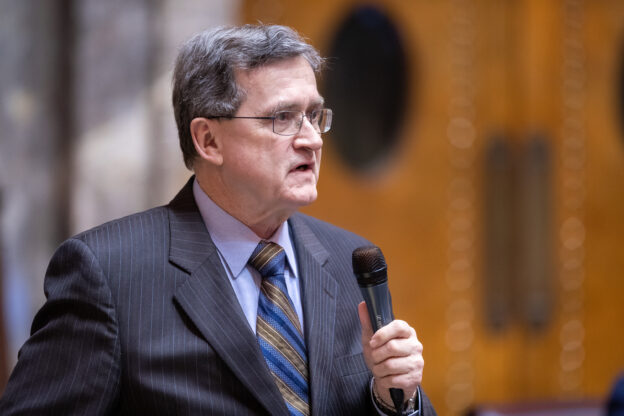
The outlook for the hospital that serves Toppenish and much of the lower Yakima Valley is brighter now that bipartisan legislation from Sen. Curtis King has won full legislative approval.

Senate Bill 5532 would provide enhanced payments to low-volume, small rural hospitals like Astria Toppenish Hospital. It specifically would require Medicaid payments for acute-care services to be made at 120% of the Medicaid fee schedule for inpatient services and 200% of the Medicaid fee schedule for outpatient services when services are provided by a hospital that meets certain requirements.

“It’s good to see the Legislature pass this important bill and send it to the governor,” said King, R-Yakima. “The bill is critical to the future of Astria Toppenish Hospital, and vital to the needs of the citizens of the lower Yakima Valley, our Hispanic community and the Yakama Tribe. Without this extra funding, the hospital is at risk of closing.”

The proposal received unanimous approval during each step through the Legislature. After the Senate originally passed SB 5532 on a 48-0 vote on March 6, the House of Representatives amended and then approved the altered proposal 98-0. The Senate today voted 48-0 to concur (or agree) with the House changes to the bill.

The House amendment would change the implementation date for increased hospital-reimbursement rates from Jan. 1, 2024, to July 1, 2024, and would make SB 5532 invalid unless it is funded in the state operating budget.

Senate passes King bill that would help rural hospital in Toppenish

A bipartisan proposal sponsored by 14th District Sen. Curtis King that would help keep the doors open at Astria Toppenish Hospital, which serves much of the lower Yakima Valley, was unanimously approved by the Senate yesterday.

Senate Bill 5532 would provide enhanced payments to low-volume, small rural hospitals like Astria Toppenish Hospital. It specifically would require Medicaid payments for acute-care services to be made at 120% of the Medicaid fee schedule for inpatient services and 200% of the Medicaid fee schedule for outpatient services when services are provided by a hospital that meets certain requirements.

“This bill is critical to this small rural hospital in the lower Yakima Valley,” said King, R-Yakima. “It is a hospital so valued and needed by the Yakama tribe, by our Hispanic community and by all of the citizens who live in the lower Yakima Valley. Without this extra funding, the hospital is at risk of closing. I’m so very glad the Senate passed this important bill.”

During the public hearing on SB 5532 in the Senate Health and Long Term Care Committee in February, several local people testified in support, including Yakima County Commissioner LaDon Linde, Dr. Raul Garcia from Astria Toppenish Hospital and Dr. Rex Quaempts, medical director of Yakima Indian Health Services.

SB 5532 now goes to the House of Representatives for further consideration.

Republican senators unveil ‘Power Washington’ energy plan

Energy package focuses on seven major goals, including keeping energy costs low

Three members of the Senate Republican Caucus today unveiled a comprehensive energy plan that offers fair and reliable solutions to benefit all Washingtonians.

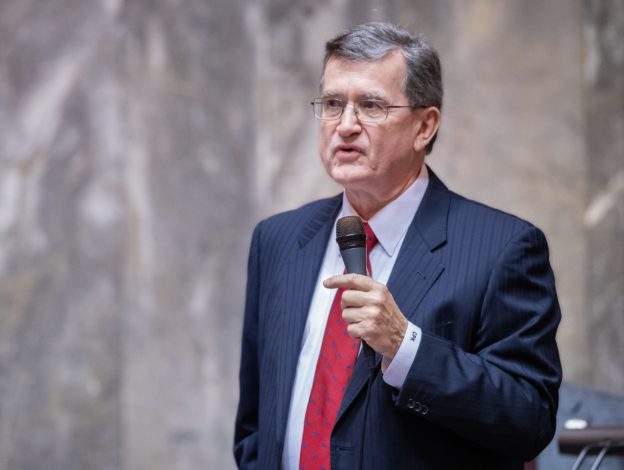
“It’s time for our state to create better energy policies,” said 14th District Sen. Curtis King, R-Yakima, who is the ranking Republican on both the Senate Labor, Commerce and Tribal Affairs Committee and the Senate Transportation Committee. “Our Power Washington plan is the first step in taking a more reasonable approach when it comes to all phases of energy in our state.”

King was joined at a news conference unveiling the Power Washington energy package by Senate Republican Leader John Braun, R-Centralia, and 7th District Sen. Shelly Short, R-Addy.

“For too long, Washington families and businesses have been forced to endure the costs of unaffordable and questionable policies that have given us larger energy bills, less energy security, and little environmental improvement,” said Braun, who serves the 20th District. “We need to take a different approach when it comes to energy in our state before fuel and electric power prices break the backs of Washingtonians. This package would help put us on a better path to reasonable policies and reliable energy.”

Short, who is ranking Republican on the Senate Environment, Energy and Technology Committee as well as Senate Republican floor leader, said their energy package aims to help reverse energy inflation, including record gas prices, in the state, as well as strengthen Washington’s threatened power grid.

“I’m excited to get to work with my colleagues across the aisle and the governor’s office addressing these solutions during the 2023 legislative session,” said Short, R-Addy. “Our goal should be to improve and protect our energy systems and infrastructure with innovative technology that is both reliable and cost effective.”

The “Power Washington” plan includes proposals that aim to meet seven specific goals:

  • Help people access different kinds of alternative vehicles, such as hybrids and hydrogen.
    • Incentivize passenger and commercial hybrid-vehicle adoption.
    • Promote hydrogen fuel as an additional alternative option.
    • Allow state agencies to purchase vehicles that best suit their needs.


  • Preserve, improve, and expand Washington’s clean hydropower system.
    • Build and upgrade hydropower facilities to meet the state’s clean energy goals.
    • Keep Washington’s dams in good shape.
    • Show support for the four federal dams on the lower Snake River.
    • Find practical ways to support endangered fish and other species.


  • Enable the capture of carbon and invest in Washington’s working forests and natural resources to maximize carbon absorption.
    • Prioritize capturing carbon.
    • Invest in Washington’s forest health to control wildfires.
    • Replant burned areas and actively manage forests.


  • Slash high fuel prices for drivers.
    • Put a cap on cap-and-tax.
    • Track the price impacts of fuel standards.
    • Untie a key fuel tax from inflation.


  • Ensure that the transition to new energy technology is environmentally responsible.
    • Restore local review for solar and wind-farm projects.
    • Require wind turbine blades to be recycled.
    • Establish a greater understanding of the lifetime impacts of vehicle batteries.
    • Jump-start the recycling program for solar panels.


  • Shore up the state’s electric grid to keep providing affordable and reliable power.
    • Create more flexibility for meeting emissions goals.
    • Stick with one electricity requirement, not many different requirements.
    • Embrace local “in-house” energy solutions.
    • Promote the manufacturing and use of advanced nuclear technology.


  • Keep energy costs low so people can be secure in their homes and businesses.
    • Provide energy relief for vital community services.
    • Encourage affordable and reliable natural gas heat at home.
    • Empower people by removing limits on the types of appliances they can buy.

The 2023 legislative session is scheduled to last 105 days, starting Jan. 9 and ending April 23.

Sen. King statement on Inslee’s call to ban new gas-powered vehicles by 2035

Sen. Curtis King, ranking Republican on the Senate Transportation Committee and R-Yakima, issued this statement following Gov. Jay Inslee’s announcement last week that he will impose a rule banning the sale of new gas-powered vehicles by 2035, meaning that only new all-electric or hydrogen-powered vehicles can be sold in Washington by that year.

“Governor Inslee’s gas-powered vehicle prohibition will hurt Washingtonians, especially those who can least afford it. Electric vehicles are more expensive – and that will not change by 2035.

“I do not support bans like this one – we do not know if the benefits will be greater than the expense. There is still much to learn about the long-term environmental impacts of many aspects of electric vehicles. We must look at EV manufacturing, required infrastructure, road impacts and battery disposal options before forcing every Washingtonian to drive an electric vehicle. I do support incentivizing hybrid vehicles, along with funding research of emerging technologies, such as hydrogen fuel cell energy.

“Our highest priority should be to ensure the stability of our state’s electrical grid. If all cars were all electric and we do all the other things our governor suggests, like breaching our dams and abolishing natural gas, we will not have enough electrical power.

“Washington state is fortunate to be able to reduce our carbon footprint with immense working forests and clean hydropower. This is an exciting time to utilize our natural resources, make reasonable decisions, and plan responsibly for the future. Our citizens deserve thoughtful solutions that are Washington-based and utilize the unique features of our great state. We don’t need harsh and unreasonable mandates.”

King serves the 14th Legislative District. 

King receives recognition for his record of bipartisan leadership

During its annual Cascade Conference in Leavenworth, the Mainstream Republicans of Washington announced that state Sen. Curtis King is this year’s recipient of the organization’s Mitchell-Hill Award.

The award, which was given to King for his ability to work in the Legislature in a bipartisan manner, is named after two former Republican legislators, 30th District Rep. Maryann Mitchell and 45th District Sen. Andy Hill.

“Curtis King has demonstrated Mainstream Republican values throughout his tenure in the Senate. In a time of polarization and rigid partisan politics, he has worked in a bipartisan fashion with civility to craft and pass major transportation projects and budgets. Senator King is very deserving of this award,” said former Secretary of State Sam Reed, one of the organization’s leaders.

“It’s a great honor to receive this award,” said King, R-Yakima. “I’m especially honored because one of the Republicans the award is named after is Andy Hill, whom I had the privilege and pleasure of serving with in the Senate before he passed away a few years ago. I try hard to work in a bipartisan manner when times call for it and doing so allows me to get more accomplished for the people of our district and the state.”

King is the ranking Republican member on both the Senate Labor, Commerce and Tribal Affairs Committee and Senate Transportation Committee. He was elected as the 14th Legislative District state senator in 2007 and has been re-elected as the district’s senator in 2008, 2012, 2016 and 2020.

14th District legislators pleased to see local projects in final state capital budget

The 14th District team of Sen. Curtis King and Rep. Gina Mosbrucker and Rep. Chris Corry are applauding the new two-year state supplemental capital budget approved by the Legislature this week for including many projects located in their district.

“I am very pleased with the level of funding that has been provided to the projects in our district that are included in the capital budget. These projects will help our district for years to come. Representatives Corry and Mosbrucker and I met during the session to make sure these projects were in the capital budget. It was good teamwork,” said King, R-Yakima.

“I appreciate the project requests we received, and I am honored to help bring this funding home to our district,” said Mosbrucker, R-Goldendale. “It’s a very diverse list of local projects that will receive capital budget funding, from a behavioral health/substance abuse facility, a new animal shelter, bridge repair, cold storage for a food bank, a new community swimming pool, and more, all of which are important to our area. I am grateful to my seatmates, Senator King and Representative Corry, in this collaborative effort to create jobs, improve infrastructure, and strengthen our communities throughout the 14th District.”

“It was a pleasure working with Senator Curtis King and Representative Gina Mosbrucker to ensure that 14th District projects made it across the finish line and into this capital budget,” said Corry, R-Yakima. “Our district did well in Olympia’s capital budget process. The capital budget, a largely bipartisan spending plan, invests taxpayer dollars on local infrastructure. These projects will serve our communities, individuals and working families for generations to come.”

Here are the 14th District local and community projects funded in the supplemental capital budget:

  • Northwest Harvest food bank in Yakima – $3.2 million
  • Comprehensive Health Care’s Goldendale facility – $1.03 million
  • Martin Luther King Jr. Park Community Pool in Yakima – $1 million
  • Klickitat County Animal Shelter in Goldendale – $670,000
  • Klickitat Wildlife Area Simcoe Fencing – $450,000
  • Rock Creek Bridge replacement – $400,000
  • Steep Creek Bridge replacement – $400,000
  • Town of Naches Mobile Stage – $250,000
  • YR-26 Jones Bridge replacement – $150,000
  • Yakima Valley Trolleys Bucket Truck in Yakima – $70,000
  • Naches rearing pond – $50,000
  • Yakima County Fire District 12 in Yakima – $10,000

The capital budget also provides $232,000 in funding for development of the YMCA Yakima Park, which is located in Yakima, but found in the 15th District.

The 2022 supplemental capital budget funds the construction and maintenance of state buildings, public schools, higher education facilities, public lands, parks and other assets throughout Washington.

The House voted 98-0 to pass the final version of the capital budget (Senate Bill 5651) Tuesday night. The Senate approved it 49-0 on Wednesday. The capital budget now goes to Gov. Jay Inslee for consideration.

The 60-day legislative session is scheduled to end today.

Statement from Republican transportation leaders on the agreement reached by the Legislature on the Move Ahead Washington transportation package

Sen. Curtis King, ranking Republican on the Senate Transportation Committee, and Rep. Andrew Barkis, ranking Republican on the House Transportation Committee, issued this statement regarding the Legislature’s agreement on the 2022 supplemental transportation budget (Senate Bill 5689) and the Move Ahead Washington transportation package (Senate Bill 5974 and Senate Bill 5975).

“Unfortunately, the partisan transportation package from the majority will punish drivers throughout Washington with higher fees and taxes,” said King, R-Yakima. “It isn’t right to make our citizens pay more to own a car. The higher taxes and fees passed today by the majority party, on top of measures they’ve passed in recent years, will make it much more costly to drive. Most people in our state are already struggling with inflation, and now gas prices are rising daily. The legislation passed today will make things worse. I’m disappointed that for the first time in our history, a completely partisan transportation package has been passed with zero input from 20 Washington state legislative districts. Our citizens need relief and deserve better.”

“It’s disingenuous for the majority party to imply this package isn’t going to raise the cost of living on every Washingtonian. Besides the new taxes and fees that are included, a large portion of the intended revenue comes from the Climate Commitment Act passed in 2021. One integral component of the CCA is cap-and-trade, which goes into effect later this year. This will raise the price of gas at the pump even higher than we’re experiencing right now. Washingtonians are still recovering from the pandemic, inflation is at a 40-year high, and gas prices are already at one of the highest rates we’ve seen. This is the wrong time to be pushing this package forward,” said Barkis, R-Olympia. “Republicans from both chambers had solutions that wouldn’t raise taxes and fees on anyone or anything. Given the historic revenue the state is experiencing, we could’ve built a bipartisan package that provided relief to the taxpayers. With existing revenue, we could’ve funded new innovations for our transportation system, while keeping our promise to complete projects already on the books. I’m extremely disappointed the process was partisan and does not reflect the true transportation needs of every corner of our state. Washingtonians deserve real solutions from their transportation leaders and tax dollars.”

Today, both chambers are set to vote on the agreed upon supplemental transportation budget and the Move Ahead Washington transportation package.

The 2022 legislative session is scheduled to adjourn Thursday, March 10.

King unveils state transportation-funding plan free of tax or fee increases

Sen. Curtis King, the Republican leader on the Senate Transportation Committee, today unveiled a plan to make nearly $23 billion in transportation investments statewide without any tax or fee increases.

“There are important transportation needs throughout Washington that need to be addressed soon,” said King, R-Yakima. “This proposal funds many of those, including new highway projects, maintenance and preservation projects, fish-barrier removal, ferries, transit, rail and other modes. Best of all, this plan does not include any tax or fee increases, so people across our state who are struggling with inflation won’t have to pay more to have a better transportation system.”

Details of King’s $23 billion transportation funding proposal can be viewed here.

The plan uses many of the same funding sources in the package released by Democratic transportation leaders a few weeks ago, including:

  • $5.4 billion expected from the Climate Commitment Act;
  • $3.4 billion from the federal government’s new surface transportation reauthorization; and
  • a $2 billion one-time transfer from the state operating budget.

The key difference between King’s proposal and the Democrats’ plan is how his plan would shift half of the state sales-tax revenue from car and truck sales in Washington, starting in 2023. This shift in vehicle sales-tax revenue is expected to generate $12.188 billion over the 16-year span of the package.

“In the past few years, some of my Senate Republican colleagues and I have advocated for using some of the tax money from vehicle sales for our highway needs, and the case for that approach is stronger than ever now. There is a connection between tax revenue from vehicle sales and transportation, so it makes sense to use that money to address transportation needs in our state,” said King.

King’s plan includes funding in several transportation areas:

  • $6 billion for maintenance and preservation projects in the state.
  • $4.16 billion for new highway projects, including $1.2 billion for replacing the Interstate 5/Columbia River Bridge between Vancouver and Portland, $640 million for State Route 18 widening, $300 million for the U.S. Highway 2 trestle project, $244 million for I-5 high-occupancy vehicle lanes, $210 million for the I-5 Nisqually Delta project, $240 million for a U.S. Highway 12 project between Pasco and Walla Walla, and $180 million for a new Hood River Bridge over the Columbia River between Washington and Oregon.
  • $1.8 billion toward existing highway projects, including $460 million for Interstate 405 corridor construction, $520 million for a State Route 520 project, $155 million for an Interstate 90 project at Snoqualmie Pass, and $434 million for the SR-167/SR-509 Puget Sound Gateway project.
  • $2.435 billion for fish-barrier removal projects.
  • $150 million for freight rail projects.

Under King’s plan, the $5.4 billion in Climate Commitment Act funding would be used to pay for additional multimodal funding, including the construction of five new hybrid-electric ferry vessels. The plan also includes, from other sources:

  • $500 million for transit programs and projects.
  • $440 million for ferries.
  • $190 million for “active transportation projects,” including $100 million for “safe routes to schools” projects and $90 million for a bicycle and pedestrian grant program.

King unveiled his transportation funding plan during a virtual news conference today. He was joined by Senate Republican Leader John Braun of Centralia. The news conference can be viewed here.

Sen. Curtis King’s Olympia Update – Join us at 14th District Virtual Town Hall February 19

In this update, I cover the first few weeks of the 2022 legislative session and preview the 14th District virtual town hall on February 19. You can read the entire e-newsletter here.